
Hydraulic Pressure Gauge Fittings: The Complete Selection and Installation Guide
A loose gauge fitting at 3,000 PSI is not just leaking oil – it is creating a pinhole jet capable of penetrating human skin, and resulting injuries which lead to amputation in nearly half of all cases. That one data point from Cornell University’s research into high-pressure injection injuries explains why selecting the right gauge fitting matters far more than simply avoiding a puddle on the shop floor.
This primer deconstructs the thread standards, material selection, and installation techniques behind every pressure gauge connection in a hydraulic circuit. Whether you are putting together a hydraulic test point setup for field diagnostics or replacing a gauge adapter on a 10,000 PSI press, the end goal is a leak free, safe, and precise pressure reading.In This Guide
- What Are Hydraulic Pressure Gauge Fittings?
- Types of Pressure Gauge Fittings and Thread Standards
- How to Select the Right Hydraulic Gauge Adapter
- What to Include in a Hydraulic Pressure Gauge Kit
- Pressure Gauge Needle Valves and Essential Accessories
- Installation Best Practices and Common Mistakes
- FAQ
What Are Hydraulic Pressure Gauge Fittings?
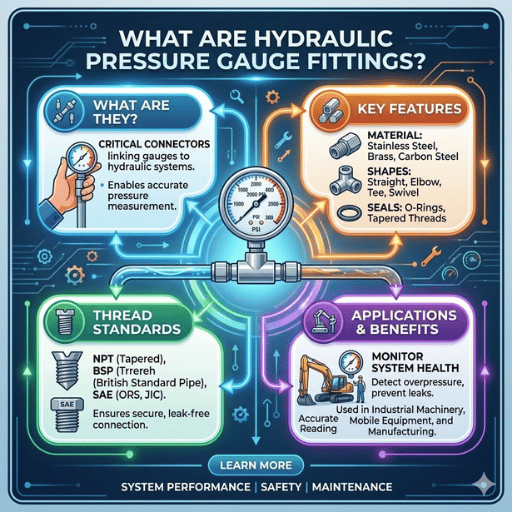
Hydraulic pressure gauge fittings are threaded adapters which connect a gauge to the monitoring port of a hydraulic circuit. They live between the gauge itself (most often with a 1/4” NPT male connection at bottom) and the gauge port on pumps, manifolds, cylinders, or filter housings. If the right fitting is not used, there is no way to achieve an accurate pressure reading – or even any reading at all.
Most hydraulic circuits use several thread standards throughout the system, in order to interface between the gauge and monitor ports. A Japanese excavator, as one example, may use BSPP parallel thread standards on Bosch Rexroth valves, SAE ORB standards on the main pump, and NPT connections on aftermarket accessories. To hook everything up, each one of these connections needs the appropriately-sized gauge adapter to join the gauge thread and monitor-port thread. ⚠️ Important As per the U.S. Department of Labor (OSHA), hydraulic systems typically run between 1,000 and 3,000 PSI, with some over 10,000 PSI. Slip a gauge fitting at these pressures, and the high-velocity fluid jet can penetrate skin at just 100 PSI. Never check leaks with your bare hand. Use cardboard or paper instead.
When gauge fittings fail, root causes are usually among one of four types: thread mismatch (NPT forced into a BSP port), pressure rating exceeded, seal type mismatch (using a taper-thread fitting where O-ring seal is needed), or material breakdown from chemical incompatibility with the hydraulic fluid. Our records of supplying hydraulic test point fittings to construction and mining equipment fleets show that thread mismatch accounts for more than 50% of all field gauge leaking issues.
Types of Pressure Gauge Fittings and Thread Standards
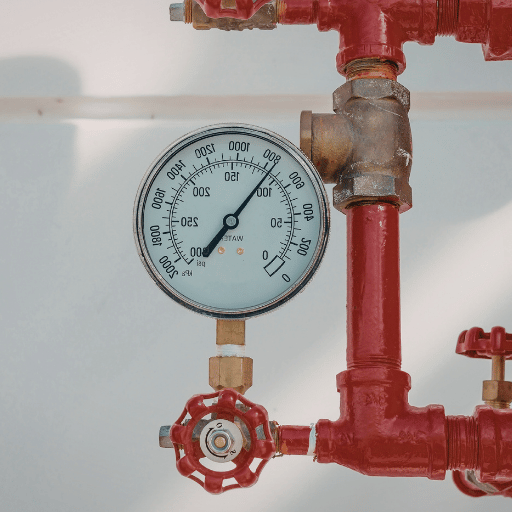
Six primary thread standards dominate the hydraulic fitting market. They are not interchangeable – using a cross-threaded NPT fitting on a BSPP port is the fastest way to damage both parts and cause a critical leak. Brief descriptions of each standard’s capabilities are given in the following table:
| Standard | Thread Angle | Seal Method | Governing Spec | Primary Region |
|---|---|---|---|---|
| NPT / NPTF | 60°, tapered | Thread interference + sealant | ASME B1.20.1 | North America |
| BSPP (G-thread) | 55°, parallel | Bonded washer or O-ring | ISO 228-1 | Europe, UK, Australia |
| JIC 37° Flare | 37° flare cone | Metal-to-metal flare contact | SAE J514 | North America |
| SAE ORB | Straight UN thread | O-ring compressed in boss | SAE J1926 | Global (new OEM) |
| BSPT (R-thread) | 55°, tapered | Thread interference | ISO 7-1 | Europe, Asia |
| Metric (DIN 2353) | 24° cone | Cutting ring compression | ISO 8434-1 | Continental Europe |
Both NPT and BSPT look very similar as threads— both are tapered pipe lines of roughly equal dia. But NPT sports a 60° thread angle with flattened peaks, while BSPT’s angle is 55° thread with round peaks. Attempts to cross thread them result in cross-threading and predictable leakage. When troubleshooting imported equipment, identify the thread standard with a thread gauge—never install a fitting before confirming the thread standard. 💡 Pro Tip SAE ORB (O-Ring Boss) is the only standard that is designed to be inherently leak free; the O-Ring does the sealing, not the thread—just clamp it tight, no thread deformation and definitely no tape! This inherent seal makes SAE ORB one of the fastest growing standards in new OEM hydraulic fitting systems.
Pressure Ratings by Standard
According to SAE J1926, ORB fitting in non adjustable configuration is rated at a maximum pressure of 63 MPa (9,137 PSI / roughly 5,000 PSI working), while adjustable stud ends are rated for up to 40 MPa (5,802 PSI). SAE J514 JIC 37-degree flare fitting in industrial applications must pass 1,000,000 pressure cycles at 133% of rated working pressure and withstand the high-vibration conditions present in mobile equipment.
How to Select the Right Hydraulic Gauge Adapter
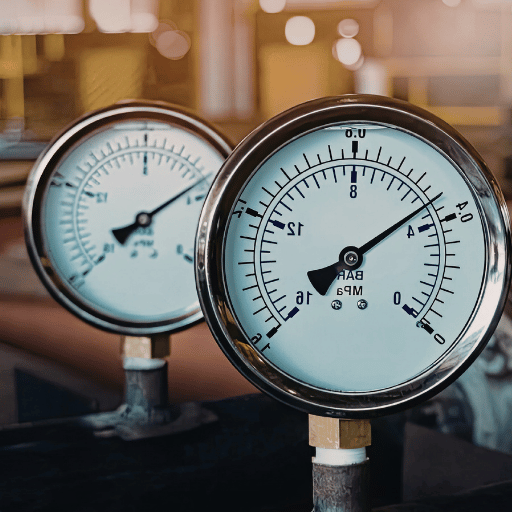
Choosing a gauge adapter standard is anything but a shot in the dark—each choice comes with a four step process that begins with system pressure reading and ends with the introduction of the proper seal method. Complete the process or face the consequences of a leaking, pressure failing, or internally corroded fitting within months.4-Step Adapter Selection Method
- Determine system pressure range—Read the pump manufacturer nameplate or consult the system schematic— expect to experience 3,000–5,000 PSI for generic construction equipment and 10,000 PSI (700 bar) for specialty presses.
- Compare the thread standard— Identify the port thread (NPT, BSPP, JIC, SAE ORB, or Metric) and the gauge thread (typically 1/4″ NPT male or female) and choose the adapter fitting to join the two.
- Arrange for material quality—Carbon steel (zinc coated) is compatible with petroleum-based liquids. Marine, chemical, and food-grade liquids warrant stainless steel. Brass is illegal over 3,000 PSI, and is uncomfortable with phosphate ester liquids. Whether the adapter is made from carbon steel, stainless steel, or brass impacts service life under vibration.
- Select the seal type—NPT needs sealant; BSPP needs a Bonded Washer or an O-Ring; JIC needs a clear 37 flare surface; ORB needs an O-Ring settled correctly. Pairing the wrong seal type with any standard has consequences: a fitting on an incorrect standard is guaranteed to leak.
Material Selection Guide
| Material | Pressure Rating | Best For | Avoid When |
|---|---|---|---|
| Carbon Steel (zinc-plated) | High (up to 5000 PSI standard; 10,000 PSI rated) | Construction, industrial, high-pressure systems | Marine or corrosive environments (low corrosion resistance without coating) |
| Stainless Steel | High | Marine, chemical processing, food/beverage, offshore | Budget is the primary constraint (2–3x cost of carbon steel); economical only for critical applications |
| Brass | Low to medium only | Low-pressure gauges, fuel systems, refrigeration | High-pressure hydraulics or phosphate ester fluids |
Industry standard safety factor for dynamic hydraulic fitting standards is 4:1 — a rated 3,000 PSI working pressure must survive 12,000 PSI burst pressure. When choosing the pressure test point connectors used in field diagnostics, always make sure to select a working pressure value greater than the maximum system operating PSI (nominal system operating pressure).
What to Include in a Hydraulic Pressure Gauge Kit
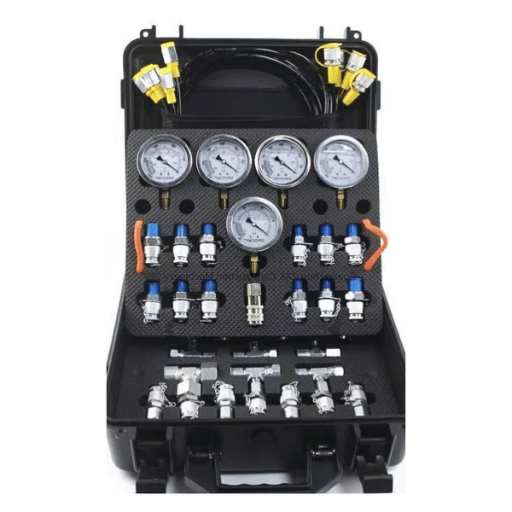
A pressure gauge kit is only useful as long as connections it can read. Most budget kits sold on Amazon come with 14pcs covering only one thread standard. This may be fine in a home workshop, but next time you see a BSPP port on a European-built machine out in the field, not so much.
Kit Tiers by Use Case
| Tier | Contents | Price Range | Use Case |
|---|---|---|---|
| Budget | 1–2 gauges, 3–6 couplings, basic hose | $49–$80 | DIY / occasional maintenance |
| Mid-Range | 3 analog gauges, 9–11 couplings, 3 hoses, hard case | $150–$250 | Regular maintenance / small fleet |
| Professional | 3–5 gauges, 15–20+ adapters (JIC/ORFS/ORB/NPT/BSP), 60″ microbore hoses, gauge isolator, hard case | $400–$800 | Field service / OEM technicians |
| Digital / Premium | Digital gauges with auto peak hold + data logging, full adapter library, calibration certificate | $800–$1,500+ | Precision diagnostics / calibration labs |
Essential Components Checklist
- Glycerine-filled pressure gauges covering at a minimum, 3- ranges (600 PSI, 3,000 PSI, 10,000 PSI)
- 60″ flexible microbore test hoses (keeps operator out of way of moving parts)
- Quick-connect hydraulic test points for tapping into diagnostic ports
- thread adapters covering JIC, ORFS, SAE ORB, NPT and BSPP in sizes -4 through -12
- Gauge isolator valve (protects gauge from pressure surges during test cycle)
- Spare O-rings (Buna-N for petroleum based fluids, Viton for higher heat situations)
- ✔ Portable hard case for field transport
Gauge Accuracy: ASME B40.100 Grades
Not all pressure gauges read equally accurately. In accordance with ASME B40.100 accuracy standards range from Grade 4A (0.1 percent of span, for calibration lab use) to Grade B (3 percent of span in end graduations, for utility use). For hydraulic diagnostic work, Grade 1A accuracy is necessary (1 percent of span; otherwise, the 200–300 PSI pressure drops that indicate a failing pump or relief valve cannot be reliably detected).
Pressure Gauge Needle Valves and Essential Accessories
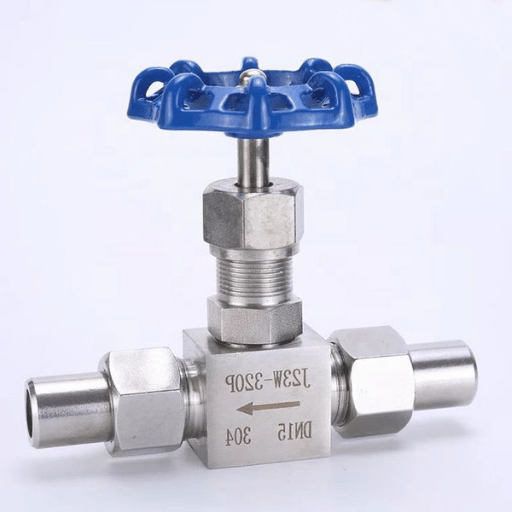
Gauges and fittings get all the glory, but the technical accessories in-between determine not only how long the gauge will last, but how dangerous it is to use. For example: a pressure gauge needle valve allows you to isolate the gauge while replacing it without depressurizing the entire circuit – a reliable safeguard with large industrial systems.
Gauge Snubbers: Three Types
In pulsating systems (hydraulic presses, reciprocating pumps) raw pressure surges quickly ruin gauges. Snubbers address this issue by limiting flow to the gauge:
| Snubber Type | How It Works | Best For |
|---|---|---|
| Porous Disk (Fixed Mesh) | Sintered metal disk restricts flow passively | Steady, repeating pulsation |
| Piston Type | Free-moving piston blocks rapid pressure spikes | Sharp transient spikes, water hammer |
| Adjustable Throttling | Built-in needle valve + piston, externally adjustable | Variable conditions where dampening must be tuned |
Sealant Selection by Connection Type
| Sealant | Use With | Rating | Never Use On |
|---|---|---|---|
| PTFE Tape | Low-pressure NPT (air, water lines) | Low pressure only | Hydraulic systems — tape shreds contaminate valves and pump spools |
| Pipe Dope | Low-pressure, low-temperature NPT | Low to medium | High-pressure or vibration-prone hydraulic connections |
| Anaerobic Sealant | High-pressure hydraulic NPT fittings | NPT pressure up to 10,000 PSI / 150°C | Non-metal connections (needs metal contact to cure) |
⚠️ Important Never apply Teflon tape to SAE ORB (O-Ring Boss) fittings. ORB connections create a seal by forcing an O-ring into a machined flat surface. The only function of the threads is to hold the flange tight. If you add tape, the fitting cannot turn in tight, and the O-ring will not seat in the fitting to make the seal; fragments shed into the system. The proper way to install the fitting is to lightly coat the O-ring with clean system fluid, tighten it by hand just until the O-ring touches the face of the fitting, then torque to specifications. No sealant is needed. Check out our hydraulic test point products for fittings designed with cone seat technology which eliminate this problem altogether.
O-Ring Material Quick Reference
| Material | Temp Range | Best For | Avoid |
|---|---|---|---|
| Buna-N (Nitrile) | -30°C to 121°C | Petroleum-based hydraulic oils, general industrial | Phosphate ester fluids, strong acids |
| Viton (FKM) | -26°C to 205°C | High temperatures, aggressive chemicals, fuels | Polar solvents, hot water/steam |
| EPDM | -54°C to 149°C | Phosphate ester fluids, water-glycol, brake fluid | Petroleum oils — will swell and fail |
Installation Best Practices and Common Mistakes
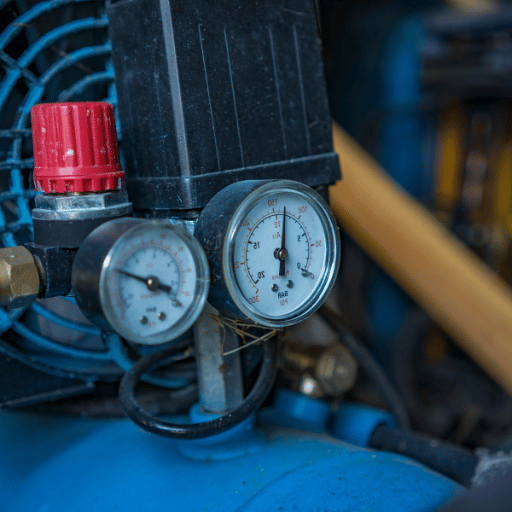
Installation of gauge fittings is quick, taking only five minutes; but three times that long to repair or recover from an injury received because of improper installation. The OSHA lockout/tagout standard (29 CFR 1910.147) requires all hydraulic pressure be bled off prior to servicing fittings and connections.
Step-by-Step Installation Process
- Relieve all pressure and verify zero pressure on a gauge before removing a fitting.
- Check all threads and sealing faces for damage, burrs or dirt.
- Choose the proper sealant — anaerobic thread sealant for NPT, no sealant for ORB, JIC, or ORFS connections.
- Lubricate-apply clean system fluid to O-rings (ORB) or thread sealant (NPT). Lightly oil JIC flare matching surfaces.
- Hand tighten until tight. For JIC, finger-tight until the flare seats.
- Torque to specifications with a calibrated torque wrench. Pipe wrenches should never be used on a gauge fitting.
- Check the orientation of a fitting – the face must be readable from the normal position of the operator.
- Gradually pressurise. Bring the system to 25%, 50%, 75%, then 100% of operating pressure, checking for leaks at each stage of increases.
Torque Reference for Common Test Point Fittings
| Fitting Type | Size | Torque (ft-lbs) |
|---|---|---|
| NPT | 1/4″ | 16 |
| NPT | 3/8″ | 25 |
| NPT | 1/2″ | 35 |
| JIC 37° (-4) | 7/16-20 | 11–12 |
| JIC 37° (-6) | 9/16-18 | 18–20 |
| JIC 37° (-8) | 3/4-16 | 36–39 |
Three Mistakes That Cause Gauge Fitting Leaks
1. Over-tightening NPT fittings. The taper of threads is designed to wedge tight – applying excess torque will split cast iron housings and valve bodies. Forums on TractorByNet show recorded incidents in which over-tight fittings blew off at operating pressures and caused injuries.
2. Using Teflon tape on JIC or ORB fittings. JIC and ORB fittings are sealed by sealing the flare surface with the adjoining face – not by thread contact. Taping a JIC or ORB strangles the flare and risks contamination.
3. Reusing flattened O-rings. An O-ring flattening causes permanent deformation to its sealing geometry. Always inspect the O-ring for flattening and cracking when disconnecting an ORB fitting, and replace if in doubt. 💡 Pro Tip To test for a leak after installing a fitting, cover all threads with a soapy solution and watch for the formation of tiny bubbles. For hard-to-find or slow leaks, introduce UV-fluorescent dye into the hydraulic fluid, and examine with a UV light. The OSHA Hazard Information Bulletin on hydraulic preventive maintenance recommends weekly visual inspections of all tubes, hoses and fittings.
Frequently Asked Questions
Q: What are the different types of pressure gauge fittings?
View Answer Six major types exist: NPT (tapered, North American), BSPP (parallel, European/international), BSPT (tapered, European), JIC 37 degree flare (metal-to-metal seal, SAE J514), SAE ORB or O-Ring Boss (straight, O-ring seal, SAE J1926), and Metric DIN 2353 (cutting ring compression, Continental European). They each use a different seal method and thread angle, and have differing pressure ratings. NPT and BSPT threads look very similar however do differ in their dimensions.
Q: What is the standard thread size for a pressure gauge?
View Answer In North America, 1/4″ NPT male is the most common gauge connection, followed by 1/2″ NPT for larger industrial gauges. In Europe and international markets, G 1/4 BSPP and G 1/2 BSPP are standard sizes per ISO 228-1. A hydraulic system’s gauge port, however, may use any thread standard (ORB, JIC, BSPP, Metric), so a gauge adapter is almost always needed to bridge the gauge thread to the port thread.
Q: Are hydraulic pressure gauge fittings universal?
View Answer No. Hydraulic pressure gauge fittings are not universal. There are at least six major thread standards (NPT, BSPP, BSPT, JIC, SAE ORB, Metric) with different thread angles, seal methods, and dimensions. A fitting designed for one standard will not seal correctly on a port built for another. This is why professional hydraulic test kits include adapters covering multiple standards, and why field technicians carry thread identification gauges to confirm the port type before selecting a fitting.
Q: How do you measure pressure in a hydraulic system?
View Answer Connect a calibrated pressure gauge to a test port or gauge port on the hydraulic circuit using the correct adapter fitting. Ensure the system is off and depressurized before installing the gauge. Use a microbore test hose (60 inches recommended) to keep a safe distance from moving components. Pressurize the system gradually and read the gauge at the operating point specified in the machine’s service manual. Pulsating systems require a snubber between the fitting and the gauge for a stable reading. Always select a gauge with a full-scale range at least 25% above the expected maximum system pressure for accurate mid-range readings.
Q: Can hydraulic pressure gauge fittings leak, and how do you fix it?
View Answer Yes, gauge fittings can leak from thread mismatch, improper sealant, over-tightening, or a damaged O-ring. To fix a leak: first depressurize the system completely. Then check the thread standard — ensure the fitting and port match (NPT to NPT, not NPT to BSP). NPT connections need anaerobic thread sealant (not Teflon tape in high-pressure hydraulics). ORB connections require O-ring inspection and replacement if worn, then torque to spec without any tape or sealant on the threads. JIC connections demand a close look at the 37-degree flare surface for scratches or cracks — replace the fitting if damaged.
Q: How to install a pressure gauge on a hydraulic press?
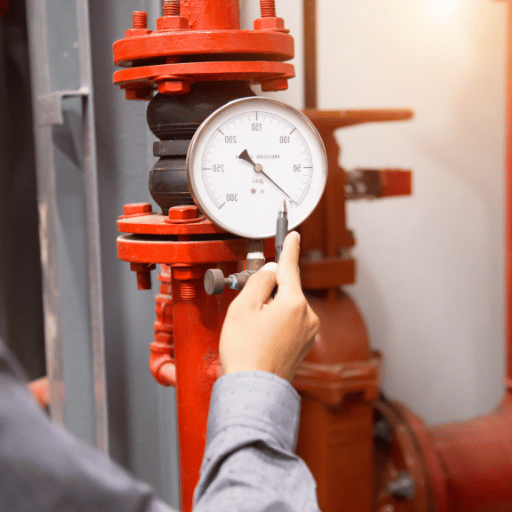
View Answer Start by identifying the gauge port thread on the press (commonly SAE ORB or NPT). Select a gauge adapter that converts the port thread to your gauge’s connection (typically 1/4″ NPT). Install a needle valve or gauge isolator between the adapter and gauge — hydraulic presses generate severe pressure pulsation that destroys unprotected gauges quickly. Add a snubber if pulsation is extreme. Apply appropriate sealant (anaerobic for NPT threads, none for ORB). Hand-tighten, then torque to spec. Pressurize gradually to verify zero leaks before running the press at full pressure.
Need Hydraulic Pressure Gauge Fittings?
IKIN Fluid manufactures a complete set for hydraulic test points, pressure gauge connectors, and gauge adapters with cone seal technology — 100% leak-tested before shipping. SGS approved. Competitive pricing with 3-year warranty. View Hydraulic Test Point Products →
About This Guide
This guide was written by the engineering team at IKIN Fluid, a manufacturer of hydraulic test points and pressure gauge connectors based in Changzhou, China. Since 2009, we have supplied cone-seal gauge fittings and test point assemblies to partners including Sany Crane, Hawee, and Bucher. Thread standard comparisons and torque specifications in this article reflect data from SAE, ASME, and OSHA publications — not our marketing department. Where we recommend our own products, we say so directly.
References & Sources
- Hazard Information Bulletin: Hydraulic System Modifications — U.S. Department of Labor, OSHA
- Hazard Information Bulletin: Hydraulic Systems Preventive Maintenance — U.S. Department of Labor, OSHA
- 29 CFR 1910.147: Control of Hazardous Energy (Lockout/Tagout) — U.S. Department of Labor, OSHA
- NIOSH Alert: Preventing Injuries and Deaths from Metal-Reinforced Hydraulic Hoses — Centers for Disease Control and Prevention
- Preventing High-Pressure Injection Injury — Cornell University, eCommons
- SAE J514: Hydraulic Tube Fittings — SAE International
- SAE J1926/1: Ports and Stud Ends with O-Ring Sealing — SAE International
- ASME B40.100: Pressure Gauges and Gauge Attachments — American Society of Mechanical Engineers
- National Pipe Thread — Wikipedia
- British Standard Pipe — Wikipedia